Current Projects
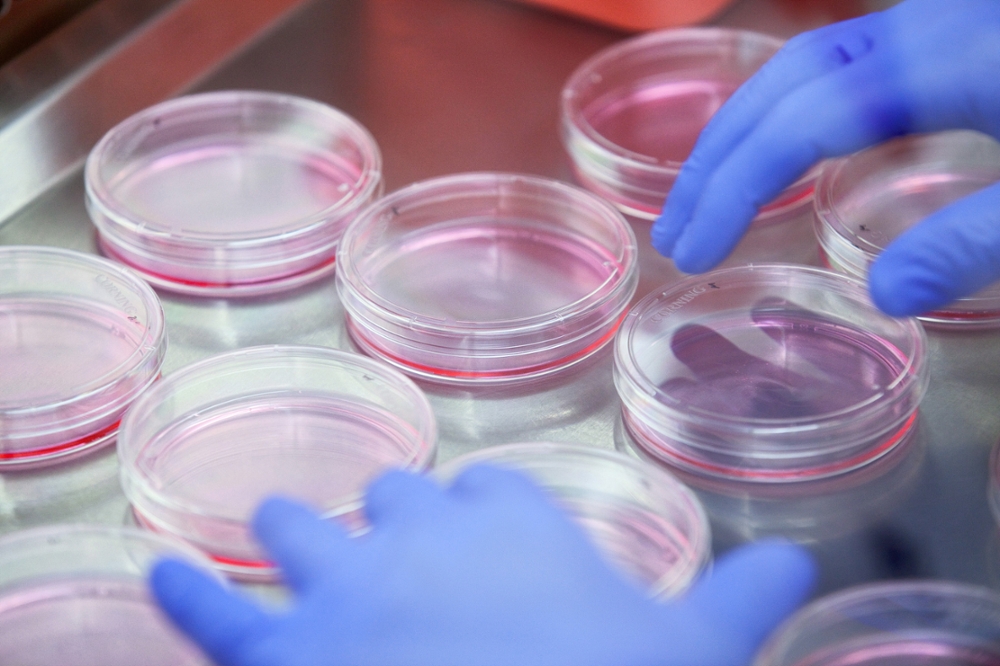 Explore the research projects currently underway through the Prevention, Risk Assessment, Early Detection and Interception of Cancer through Technology (PREDICT) Initiative. Led by faculty and collaborators across UC San Diego and beyond, these projects span pancreatic and colorectal cancer, biomarker development, blood-based screening, and health equity, all aimed at detecting cancer earlier and improving outcomes for patients at risk.
Biomarker Validation in Pancreatic Cystic Neoplasm
Diane M. Simeone, MD and Jessica Everett, MS, LGC
The overall goal of this project is to develop early detection strategies with high sensitivity and specificity through an integrative approach using blood-based biomarkers and a novel cyst fluid analysis platform, combined with relevant demographic, clinical, and laboratory variables linked to pancreatic cancer risk. To achieve this goal, we propose to conduct retrospective analysis in well-characterized samples of early pancreatic cancer and controls, and prospective collection, testing and surveillance in a large cohort of high-risk patients with pancreatic cystic neoplasms.
Blood-based colorectal screening for optimizing screening participation among individuals at risk for screening inequities
Samir Gupta, MD
In partnership with a local Federally Qualified Health Center System serving populations at high risk for colorectal cancer inequities, we recently completed an early effectiveness trial demonstrating the potential for blood-based screening to transform screening participation. Specifically, we found that a strategy of offering the additional option of an in clinic cell free DNA blood based screening test (Guardant Shield) together with an at home stool blood test nearly doubled screening participation compared to offering usual options such as a colonoscopy or an at home stool blood test alone.
Building a University of California–Wide Framework for Cancer Research
Samir Gupta, MD
University of California health systems provide clinical care to a large and diverse segment of California’s population. Electronic health records generated through routine care are a potentially rich source of information on cancer risk, screening, treatment, and survivorship outcomes. Their research value is limited, however, by incomplete information on cancer diagnoses and deaths, particularly because many people receive care across multiple health systems both within and outside the UC system. Linking large-scale electronic health record data with the statewide cancer registry can unlock the full potential of these records for discovery. This framework would ensure that patients seen at UC health sites who develop cancer are linked with their routine clinical data, enabling new discoveries across cancer epidemiology, screening, treatment, and survivorship.
Improving colorectal cancer detection among people with suggestive symptoms
Samir Gupta, MD
Colorectal cancer rates are rising among younger and middle-aged adults. Many patients present withsymptoms such as abdominal pain, blood in the stool, iron-deficiency anemia, or changes in bowel habits. Because these symptoms are common, however, it can be difficult for clinicians and patients to determinewho is at highest risk and should receive an urgent colonoscopy. With support from a charitable gift from Curebound, we are implementing a pilot study of symptomatic fecal immunochemical testing (symptomatic FIT)—a simple, at-home, biomarker-based strategy for identifying symptomatic individuals at highest risk for colorectal cancer. The pilot will inform a larger clinical trial, with the goal of expediting diagnosis among people with suggestive symptoms.
Mutographs: Understanding the Causes of Cancer to Advance Prevention and Early Detection
Ludmil Alexandrov, PhD
Mutographs was a Cancer Grand Challenges research team launched in 2017. The project sought to uncover previously unknown causes of cancer by studying the characteristic patterns of DNA mutations—known as mutational signatures—found in both cancerous and normal tissues. The central idea was that environmental exposures and biological processes can leave recognizable molecular fingerprints in DNA. By working backwards from these fingerprints, researchers could potentially identify previously unknown carcinogenic exposures and, importantly, discover preventable causes of cancer. This work formed the foundation for the current CAUSE project.
Pancreatic Cancer Early Detection (PRECEDE) Consortium
Diane M. Simeone, MD and Jessica Everett, MS, LGC
The PRECEDE Consortium is an international, multi-institutional collaborative group of experts and industry partners whose mission it is to increase survival for pancreatic cancer patients.
UCSD serves as the academic coordinating center for 65 leading academic medical centers across the globe. The PRECEDE Consortium has assembled the largest high-risk patient cohort, with longitudinal clinical data and biospecimen acquisition and tracking, and the leading clinicians and scientists in their field. The Consortium also brings cutting edge technologies to advance ability to detect pancreatic cancer at its earliest stages.
Team CAUSE: Uncovering the Causes of Cancer to Enable Prevention and Earlier Intervention
Ludmil Alexandrov, PhD
CAUSE, led by Ludmil Alexandrov at the University of California San Diego, is a Cancer Grand Challenges team working to uncover the molecular origins of cancer-causing mutations. The project addresses a fundamental challenge in cancer research: although scientists can identify characteristic patterns of mutations in DNA—known as mutational signatures—the exposures and biological processes responsible for many of these signatures remain unknown. CAUSE aims to transform these signatures from observations of past DNA damage into actionable information that can ultimately support cancer prevention and earlier intervention.